How Gypsum Plaster Helps in Reducing Construction Time
In the world of real estate, “Time” is the most expensive currency. For a developer, a month of delay means an extra month of interest payments on millions of dollars of loans. For a homeowner, it means an extra month of paying rent while their new home is unfinished. The traditional construction schedule is plagued by “Wet Pauses”—periods where work stops to let concrete or cement dry.
Gypsum Plaster is a “Time-Machine” for construction. It compresses the project schedule significantly. At Kanish Plasters, we have helped developers hand over projects 2-3 months ahead of schedule simply by switching the specification from cement to gypsum. This blog explains the mechanics of this speed and how you can leverage it.
1. The “Zero Curing” Revolution
This is the biggest factor.
- Cement Scenario: You plaster a wall. You must cure it with water for 7-10 days. During this time, the site is wet, muddy, and humid. Electrical wiring cannot be done (risk of shock). Carpentry cannot be done (wood warps). The site is effectively paralyzed for a week per floor.
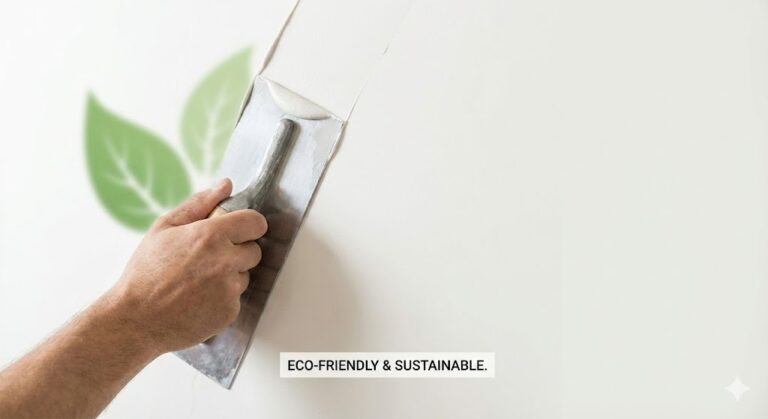
- Gypsum Scenario: You plaster a wall. It sets in 25 minutes. It dries in 3 days. Zero Curing. The site stays dry. Electricians and carpenters can work in the adjacent room simultaneously. You save 7 days per floor instantly.
2. The “Putty Skip” Step
Speed isn’t just about the plaster; it’s about the painting too.
- Cement Scenario: Cement plaster is rough. To make it paint-ready, painters must apply 2-3 coats of coarse and fine Wall Putty, sanding between each coat. This process takes 10-15 days for a standard apartment.
- Gypsum Scenario: Gypsum dries to a smooth, white, level finish. It eliminates the need for the heavy “Coarse Putty” coat entirely. Painters just apply a thin “Touch-up” putty or primer directly. You shave off another 7-10 days from the painting schedule.
3. Faster Application (Productivity)
Gypsum is lighter and easier to work with.
- Manual Speed: A mason can apply gypsum 30-40% faster than heavy cement mortar because it requires less physical effort to spread and level.
- Mechanized Speed: As discussed, gypsum is compatible with spray machines. A machine team can cover 1500 sq ft/day vs. 300 sq ft/day for manual cement work. For large commercial fit-outs, this velocity is a game-changer.
4. The “drying” Advantage
Cement walls retain moisture for weeks. If you paint too early, the paint peels. You are forced to wait.
Gypsum breathes. It releases its moisture rapidly. In a well-ventilated building, a gypsum wall is ready for oil-bound distemper or emulsion in just 4 days. This allows for “Flash Track” project execution.
5. Case Study: The 100-Unit Apartment Block
Let’s compare the timeline for internal finishing:
- Traditional Method: Plastering (3 months) + Curing (1 month overlap) + Drying (1 month) + Putty (2 months) = Total ~6-7 Months.
- Kanish Gypsum Method: Plastering (2 months) + Drying (included) + Touch-up Putty (1 month) = Total ~3-4 Months.
Result: Handover is 3 months earlier. The developer saves 3 months of interest on construction finance.
Frequently Asked Questions (FAQ)
Q1: If it dries so fast, will it crack?
No. Cement cracks because it shrinks when it dries fast. Gypsum does not shrink. Its fast drying is chemically stable.
Q2: Can we speed it up even more with fans?
Yes. In enclosed spaces, using industrial fans or blowers helps remove the humidity, allowing the gypsum to dry even faster. This is common in hotel renovations.
Q3: Does speed increase the cost?
Usually, “Fast” means “Expensive.” But here, “Fast” is actually “Cheaper” because you save on labor days, water curing costs, and scaffolding rental time. It is a rare win-win.
Conclusion: Time is Money
In the modern world, slow construction is expensive construction. Gypsum Plaster offers the most effective way to accelerate a project without compromising on quality. In fact, it improves quality. At Kanish Plasters, we specialize in high-velocity project execution. We help you cross the finish line while your competitors are still watering their walls.