How to Ensure Efficient Material Usage and Reduce Waste
In the construction business, profit is hidden in the scrap heap. It is estimated that nearly 10-15% of construction material in India is wasted due to poor handling, theft, or improper application. For a plastering business operating on tight margins, waste is the silent killer. Every bag of gypsum that hardens in the bucket or falls on the floor is direct cash burnt.
At Kanish Plasters, we treat material efficiency as a science. We operate with a “Lean Construction” philosophy. By reducing waste, we not only increase our profit margins but also reduce the environmental footprint of the project. This guide outlines the operational protocols to minimize waste and maximize yield on your sites.
1. The “First-In, First-Out” (FIFO) Storage Rule
Gypsum has a shelf life. If it sits too long, it absorbs atmospheric moisture and forms lumps (pre-setting).
The Problem: On disorganized sites, new stock is piled on top of old stock. The old bags at the bottom get crushed, expire, and turn into stone.
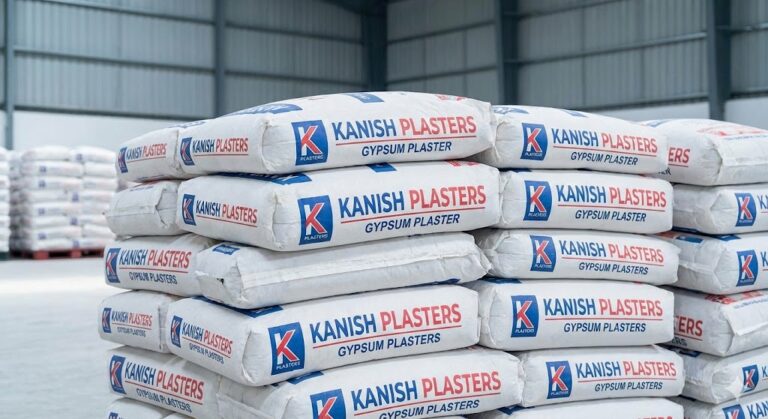
The Solution: Strict FIFO. We stack bags such that the oldest stock is always accessible first. We mark batches with arrival dates. We use wooden pallets to keep bags off the damp floor. A bag saved from moisture is a bag saved from the trash.
2. Mixing Discipline: The “Pot Life” Clock
Gypsum plaster sets in approximately 20-25 minutes.
The Problem: A greedy mason mixes 3 bags at once to save mixing time. He applies 2 bags worth, but the 3rd bag starts to harden in the bucket before he can reach it. He throws it away.
The Solution: “Just-in-Time Mixing.” We train laborers to mix only small batches—typically half a bag or one bag at a time—that can be applied within 15 minutes. It is better to mix twice than to waste once.
3. Rebound Management (The Floor Drop)
When a mason throws plaster on the wall, some of it falls down. In cement plaster, this “rebound” is often scooped up and reused (which is actually bad practice). In gypsum, set material cannot be reused.
The Solution:
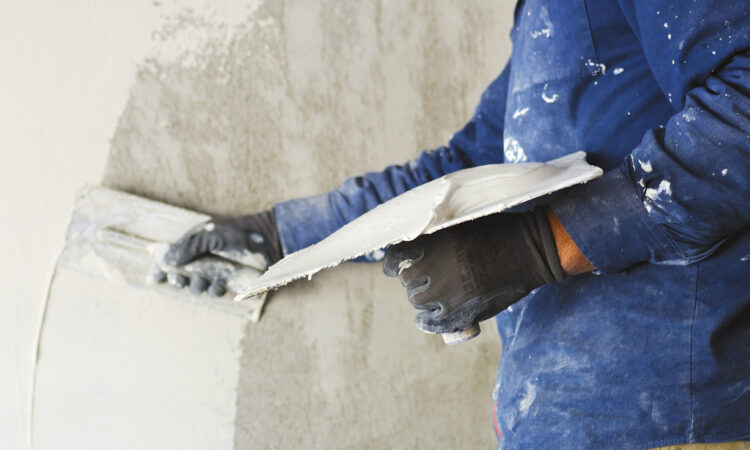
- Technique Training: We train masons in the “Press and Spread” technique rather than the “Throw” technique used for cement. This significantly reduces splash-back and droppings.
- Drop Cloths: We place plastic sheets or tarps at the base of the wall. While the dropped plaster cannot be reused for the wall, keeping it separate from dust means it can sometimes be used for filling deep electrical chases (rough filling) before it fully sets, extracting some value from it.
4. Theft and Pilferage Control
Construction sites are open environments. Bags “walk away.”
The Solution:
- Empty Bag Reconciliation: The site supervisor must collect the empty bags at the end of the day. If 50 bags were issued from the store, there must be 50 empty bags in the trash pile. If there are only 45 empties, 5 full bags were stolen. This simple audit stops theft immediately.
- Daily Consumption Log: We calculate the theoretical consumption (Area Plastered / 20 sq ft per bag). If the actual consumption is significantly higher, we investigate immediately.
5. Precision Ordering (Digital Estimation)
Ordering too much is a form of waste. Transporting excess material back to the warehouse costs money and risks damage.
The Solution: We use laser measurements to calculate the exact requirement. We add a modest 5% buffer. We do not order “approximate truckloads.” Accurate ordering minimizes the “Leftover Stock” problem at the end of a project.
Frequently Asked Questions (FAQ)
Q1: Can I reuse the hardened plaster by adding more water?
Absolutely Not. This is called “Re-tempering.” Once the chemical crystallization has started, breaking it and adding water destroys the bond. The plaster will dry powdery and fall off the wall. Dead mix is dead. Throw it out.
Q2: What is the standard wastage percentage allowed?
In the industry, 5% is standard. At Kanish Plasters, we target <2%. We incentivize our labor teams: "If you keep wastage below 2%, the saved money goes into your bonus pool." This aligns their incentives with ours.
Q3: Does machine spraying reduce waste?
Yes, significantly. The machine mixes exactly what is needed and pumps it directly to the wall nozzle. There is no spillage during carrying, and the flow control minimizes rebound.
Conclusion: Lean is Green (and Profitable)
Waste is a choice. By implementing strict storage, mixing, and auditing protocols, you can slash your material costs. In a business with tight margins, efficiency isn’t just a metric; it is survival. At Kanish Plasters, we respect every grain of material, because we know that efficiency is the truest form of profitability.